Design-
The Predator design is credited to special effects artist Stan Winston. While flying to Japan with Aliens director James Cameron, Winston, who had been hired to design the Predator, was doing concept art on the flight. Cameron saw what he was drawing and said, "I always wanted to see something with mandibles". Winston then included them in his designs. Stan Winston's studio created all of the physical effects for Predator and Predator 2, creating the body suit for actor Kevin Peter Hall and the mechanical facial effects. They were hired after attempts to create a convincing monster (including Jean-Claude Van Damme wearing a much different body suit) had failed. Arnold Schwarzenegger recommended Winston after his experience working on The Terminator.
The Predator was originally designed with a long neck, a dog-like head and a single eye. This design was abandoned when it became apparent that the jungle locations would make shooting the complex design too difficult. Originally, the studio contracted the makeup effects for the alien from Richard Edlund's Boss Film Creature Shop. However, problems filming the alien in Mexico resulted in the makeup effects responsibilities being given to Stan Winston. According to former Boss Films make-up supervisor Steve Johnson, the makeup failed because of an impractical design by McTiernan that included 12-inch length extensions that gave the Predator a backward bent satyr-leg. The design did not work in the jungle locations. After six weeks of shooting in the jungles of Palenque, Mexico, the production had to shut down so that Winston could make a new Predator. This took eight months and then filming resumed for five weeks, ending in February 1987.
Characters-
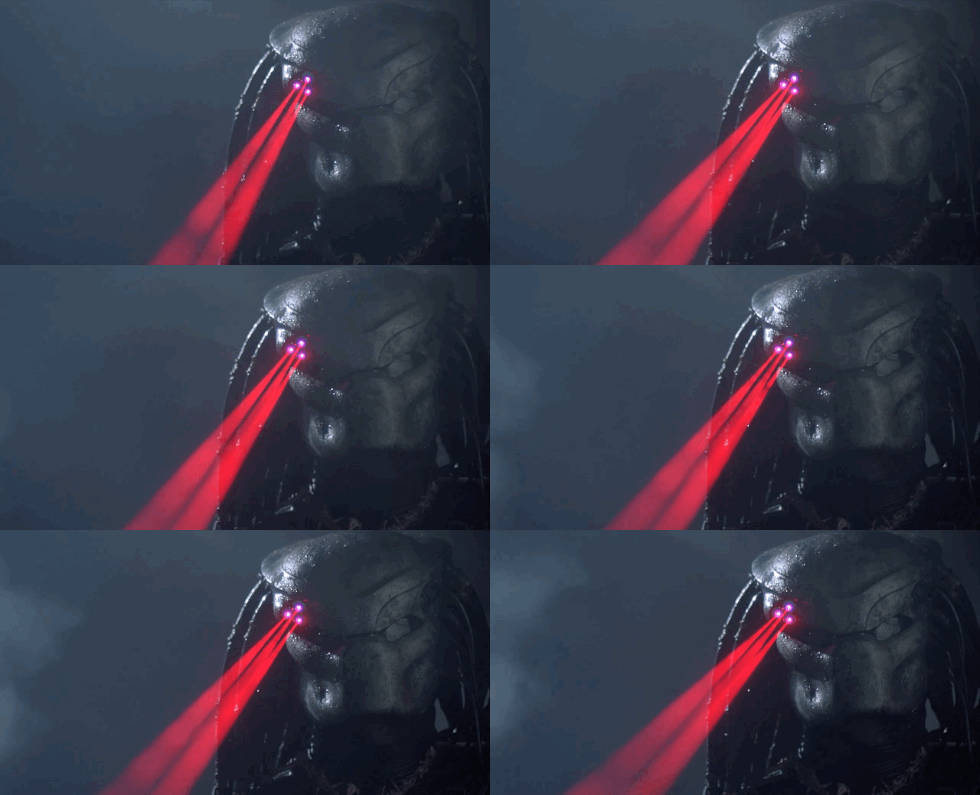
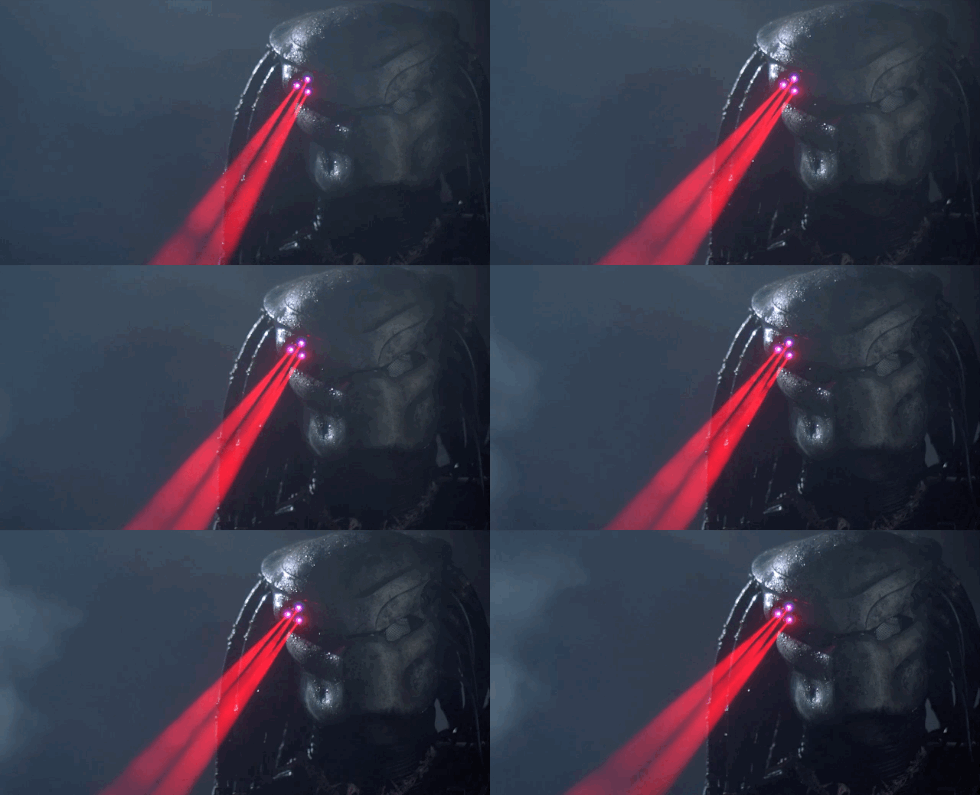
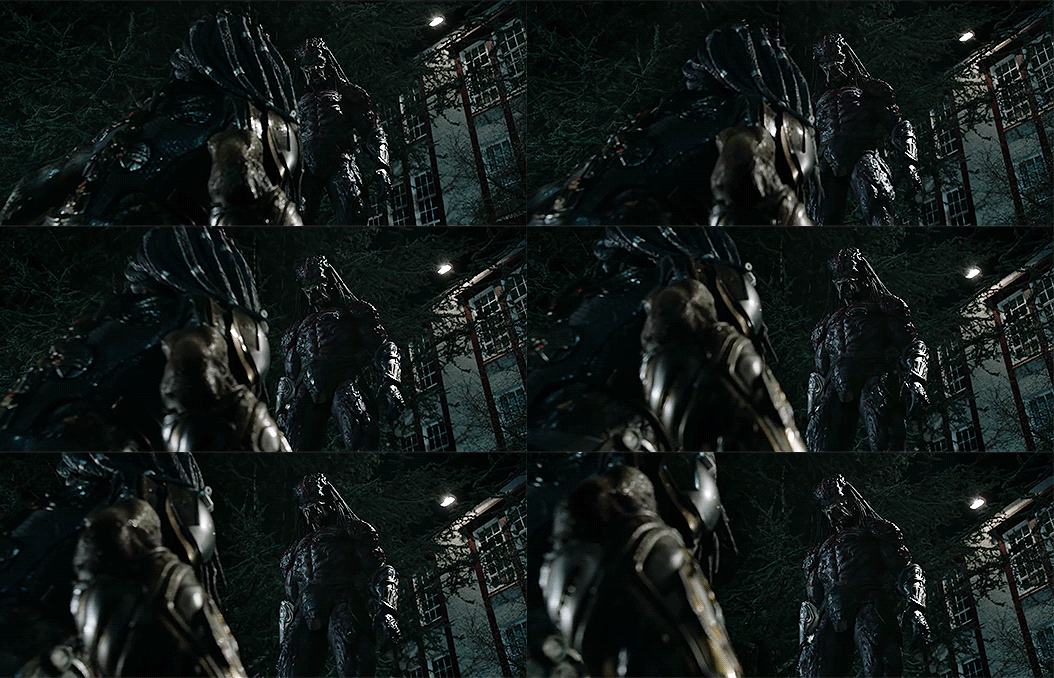
Predators are physically distinguished from humans by their greater height, arthropod-like mandibles and long, hair-like appendages on their heads that are set into their skulls (popularly perceived as "dreadlocks"). Their bodies are resilient to damage, capable of recovering from multiplegunshot wounds and radiation doses which would be fatal to humans. They are much stronger than humans, having been portrayed as being easily capable of outmatching a conditioned adult human male and shattering solid concrete with their bare hands. They are also skilled climbers, and will readily move through trees or across rooftops in pursuit of prey. Though capable of surviving exposure in Antarctic temperatures for an extended period of time it is implied that Predators have a preference for hot equatorial climates. Their blood is luminescent phosphor green in color. Their vision operates mainly in the infrared portion of the electromagnetic spectrum; they can easily detect heat differentials in their surroundings but are unable to easily distinguish among objects of the same relative temperature. A Predator's hunting helmet increases its ability to see in a variety of spectrums, ranging from the low infrared to the high ultraviolet, and also filters the ambient heat from the area, allowing them to see things with greater clarity and detail. While they are capable of breathing Earth's atmosphere, the creature in Predator 2 is seen using a breathing mask after losing his helmet, though given that the movie takes place in Los Angeles, this may simply be an air filter. Their dietary habits are also mentioned in Predator 2, where it is revealed that the creature regularly visits a slaughterhouse every two days to feed on the stored meat there.
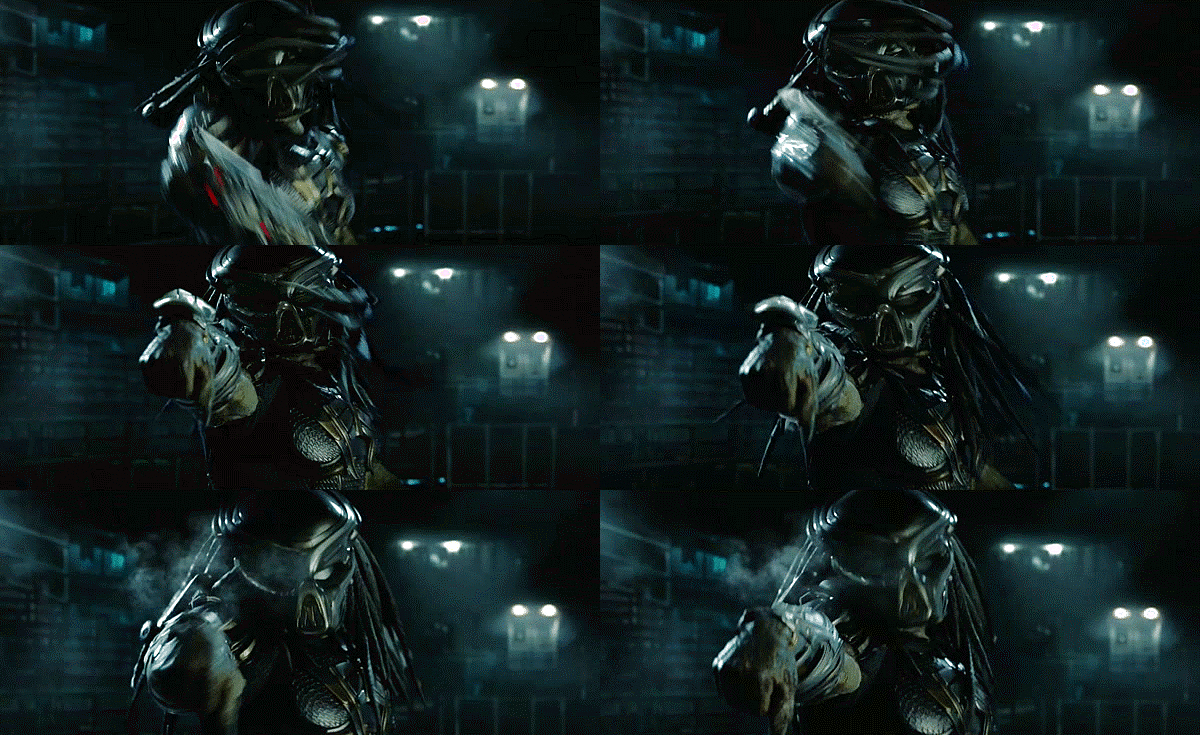
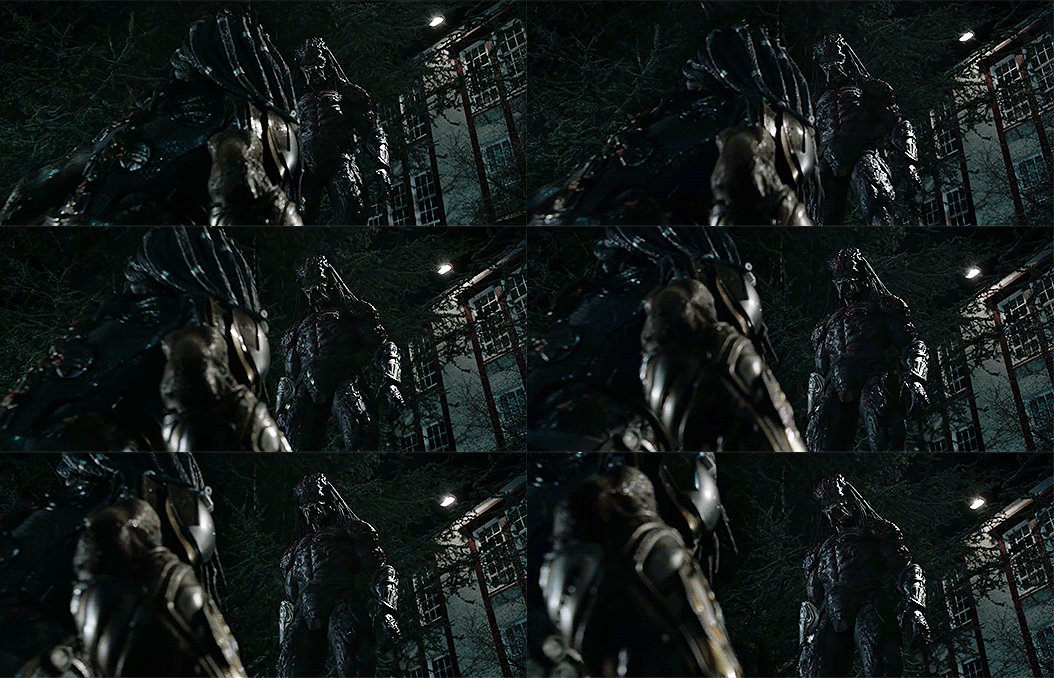
Throughout their film appearances, Predators have undergone numerous design variations. In Predator 2, the main Predator was designed to look more urban and hip than its predecessor. Design changes included tribal ornamentation on the forehead, which was made steeper and shallower, brighter skin coloration and a greater number of fangs. In Alien vs. Predator, the appearance of the Predators was redesigned to make them seem more heroic. Redesigns included a reduction in head and waist size, broader shoulders, a more muscular physique, piranha-like teeth on the upper jaw, and dryer and less clammy skin to further differentiate them from the Aliens. In Aliens vs Predator: Requiem, the Predator was returned to the sleeker design concept prior to Alien vs. Predator. For the so-called "Black Super Predators" inPredators, the designers used the differences between a cassette tape and an iPod as an analogy in differentiating the new Predators from the classic. The Super Predators were designed as leaner and taller than the "classic" Predator design, with longer faces, tighter armor and with more swept back dreadlocks.
Culture and history-
Predator culture revolves around the hunting and stalking of dangerous lifeforms. After making a kill, Predators typically skin or decapitate the carcass, converting it into a trophy. Failure in a hunt results in the Predator involved committing an honorable suicide. It is often alluded to that the reason Predators hunt is not for sustenance or elimination of threats, but as entertainment or rite of passage, as they will only attack life forms that have the ability to provide them with a challenge. In Predators, it is revealed that there are at least two different Predator tribes, which are engaged in a long lasting blood feud. The film also introduced a pack of spined, quadrupedal beasts used as flushing dogs by the "Super Predators". Creature designer Gregory Nicotero used hyenas as a basis for the creature's physique, while the spines were added later by Chris Olivia.
Predators made contact with early human civilizations such as the Ancient Egyptians, the Khmer Empire, and Aztecs, as well as a fictitious culture inhabiting what is now Bouvetoya. Upon arriving on Earth, the Predators were worshipped as gods by humans, and they taught many of the civilizations how to build pyramids (an explanation as to why many of these different ancient societies had distinctly similar cultures and architecture), but in return expected sacrifices of humans for use as hosts for huntable Xenomorphs (Aliens)- the ultimate prey for initiates. The Predators returned to Bouvetøya every century to consummate the bargain, until at one point in the ritual, the Xenomorphs spread out of control, resulting in the Predators detonating a bomb that obliterated the entire civilization. Relations between humans and Predators deteriorated from that time on; the Predators then viewed humans as little more than another quarry to hunt.
Predators feature prominently in the folklore of certain cultures; some Latin American people refer to the species as, "El Demonio que hace trofeos de los hombres" (Spanish for "The Demon who makes trophies of men"), while Jamaican superstition identifies Predators as demons from the spirit world. When hunting humans, Predators normally avoid certain individuals such as children and some adults if they are unarmed, though they will spare armed ones if they happen to be pregnant or sickly unless they are attacked by them. A human who has managed to kill a Predator or a Xenomorph in single combat or has fought alongside a Predator is usually spared by the deceased hunter's comrades and given a gift (often a rare or exotic weapon) as a sign of respect.
A learner's first successful Alien hunt is completed with the marking of his helmet and forehead with the acidic blood of his kill. When a hunter is defeated or has been assisted by a sentient prey, it is custom to award the individual with a gift, usually a weapon. The hunter generally operates alone. Even when hunters appear in groups, they rarely perform anything that resembles teamwork. Predators use Aliens as prey, creating artificial gaming reserves by keeping Queens and even Facehuggers in captivity. It is shown in a brief scene in Aliens vs. Predator: Requiem that Predators have had prior contact with a race of creatures resembling the "Space Jockey" in the film Alien. This is confirmed in the film's DVD commentary.
Language-
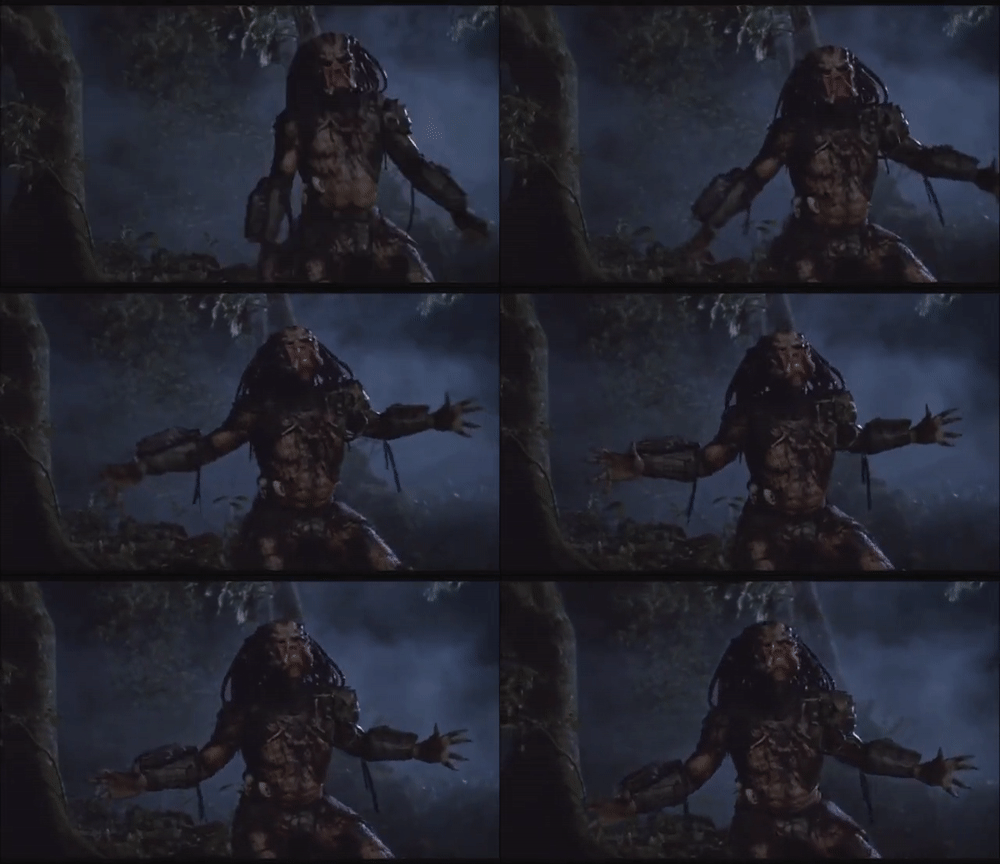
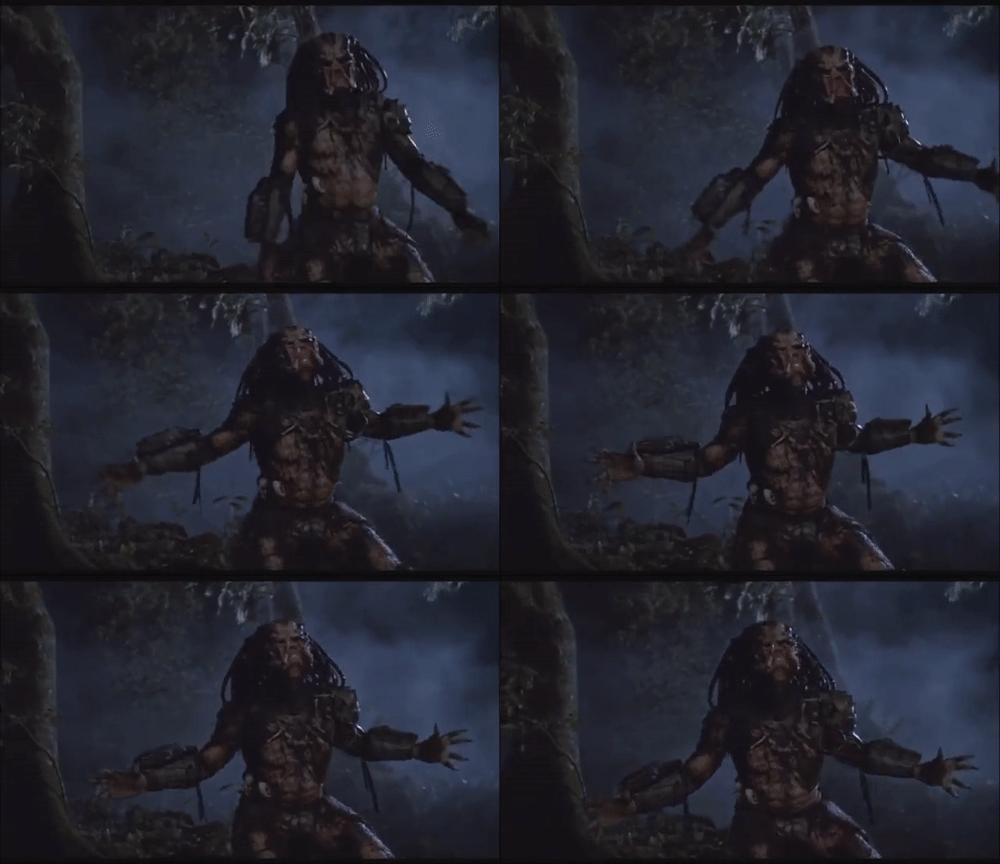
The script of the Predators is expressed in the films and other media through written patterns of dashes. These written symbols appear on the creatures' gauntlet displays, their helmets, architecture, and many other surfaces. The most common vocalizations of the Predators consists of a series of clicks, roars, snarls, and growls. Predators will mimic human language on occasion, and have been stated or shown to be able to understand and speak human languages. Author Steve Perry designed a constructed language set for the Aliens vs. Predator novel series. the video game Aliens vs. Predator gave the Predators a spoken language. The language itself is unknown but is told by the elders who give the player the levels objectives.
Technology-
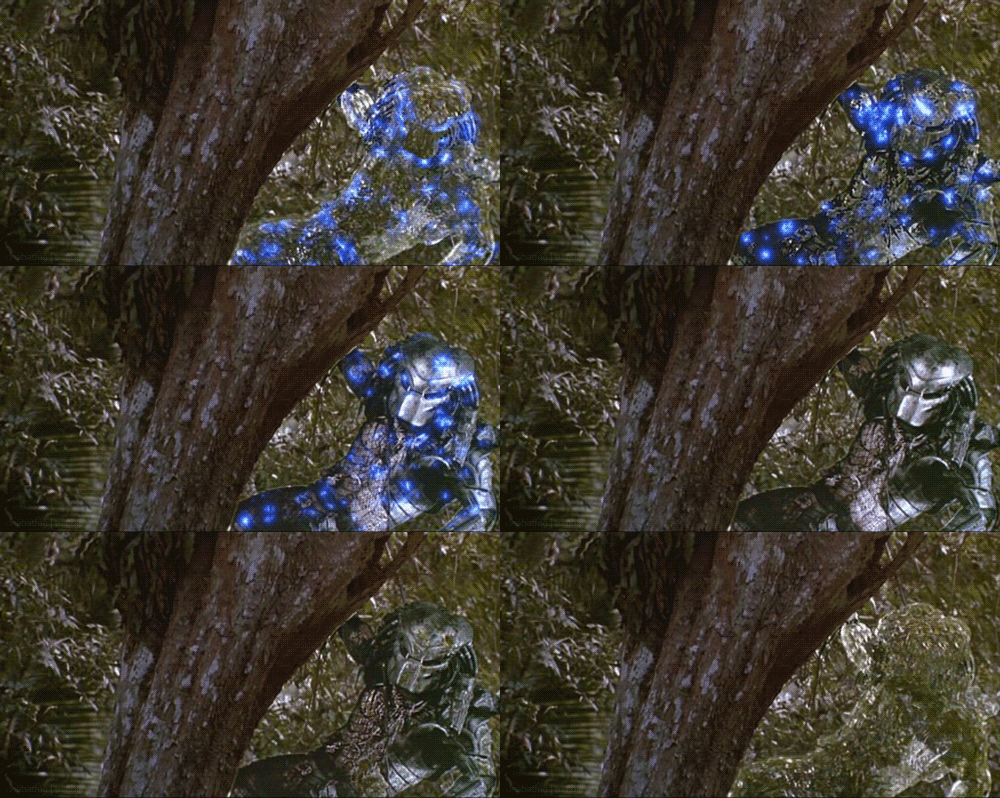
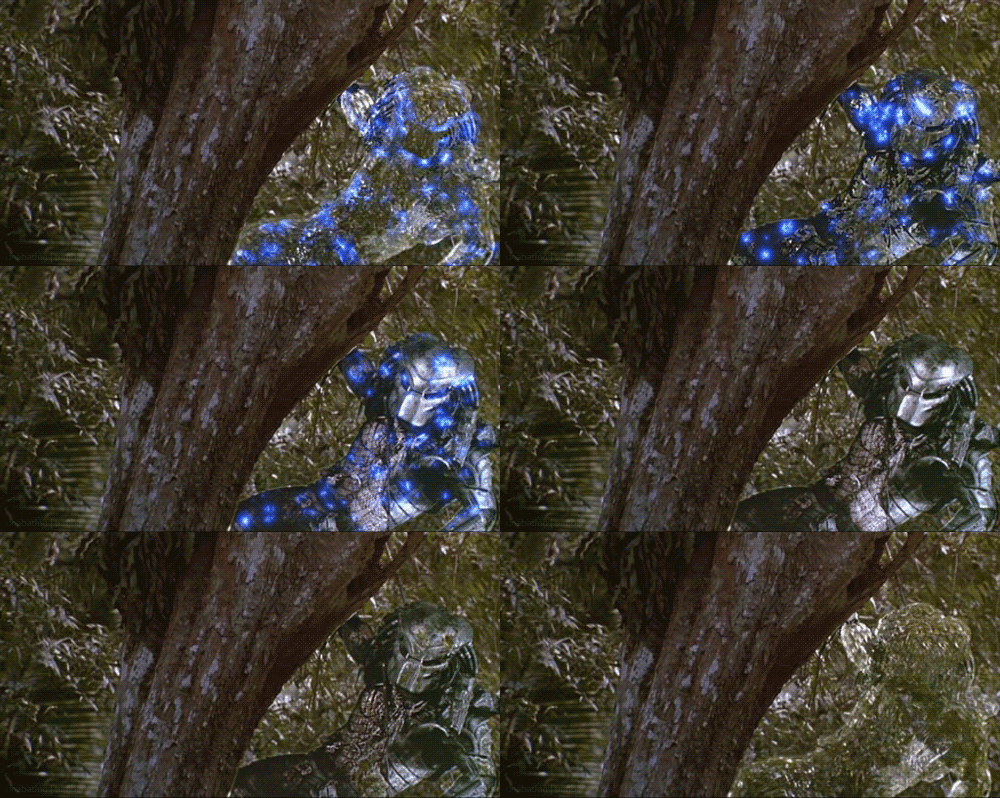
Predator technology is distinctive in many respects, not the least of which is its ornate, tribal appearance masking deadly, sophisticated weaponry. It is shown in Predator 2 that at least one Predator weapon uses a metal that does not correspond to any element on the periodic table, and some weapons have been shown to be completely resistant to the effects of acidic blood belonging to Aliens. In addition, several of these tools make use of thermal imaging to track prey. The Predator's mask also houses a viewing system that fine tunes the creature's infrared vision by filtering out ambient heat, and also allows it to view in different spectra completely. The Predator's technology is advanced enough that the mask enables it to see in specific levels of X-ray and identify diseases and cancers, as well as picking up on pulse and heartbeat signals to track targets, as seen in Alien vs. Predator and Predators, respectively. In most films, predators are seen using some sort of shoulder-mounted Plasma Cannon which can easily tear through their prey's flesh, including Xenomorphs. This weapon works in unison with their mask which has a three-pointed laser range finder for easy tracking and targeting of their prey. The Predators also make use of a light-bending cloaking device that makes them almost completely invisible. A flashback sequence in Alien vs. Predator indicates that some aspects of their technology have been in use for millennia.
Expanded universe-
In the Aliens vs. Predator novel series (based on the Dark Horse Comics) by David Bischoff, Steve and Stephani Perry, the Predators, known in the series as "yautja", are depicted as living in a matriarchal clan-based society bearing similarities to a pack mentality, with the strongest and most skilled of the group being leader. The Predators are portrayed as sexually dimorphic mammals, with females being larger and stronger than males and sporting more prominent mammary glands (like human females). Both genders give off a strong musk to signify aggression, while females can also emit it when in estrus. This musk can be detected by other Predators and canids, though it is imperceptible to humans. Predators in the Perry novels are not monogamous, and it is common for veteran warriors to sire hundreds of offspring (known as sucklings) with multiple mates. It is also revealed that their blood has the capacity of partially neutralizing the acidity of Alien blood. Their religion is partially explored in the series, showing that they are polytheistic, and that their equivalent of the Grim Reaper is the so-called "Black Warrior", who is seen as an eternal adversary who eventually wins all battles. Though female Predators are occasionally referred to in Steve and Stephani Perry's novel series, one does not make an actual appearance until the comic book limited series Aliens vs Predator: Deadliest of Species. The female's design however contradicts the descriptions given in the Perry novel series, as it superficially shows little distinction from males.
The Darkhorse / TopCow cross-over: MindHunter; which pits the Witchblade, Darkness, Aliens, and Predator franchises against each other depicts a female Predator in a manner closer to the Perry description; being very tall, with a distinct female appearance with hips and mammary glands; although with a very muscular build and sporting different armor than the males.
The comic series Predator and Aliens vs Predator: Three World War introduce a clan of Predators referred to as "Killers", who are enemies of mainstream Predators (here referred to as "Hunters") because of their tradition of training Aliens as attack animals rather than hunting them, as well as their desire for killing as opposed to honorable hunting. The character Machiko Noguchi notes in issue #1 of Three World War that "You have to understand the mindset of the Hunters, and the honor they place on facing a worthy opponent on an equal footing... a kill is the end result, but it's not the point of a hunt.... For the 'Killers,' that wasn't the case. They were all about the killing." They are first seen in the 2009 Predator series, where a number interfere in an East African civil war, coming into conflict with both humans and their Hunter counterparts. By the time of Three World War the Killers are assumed to have been wiped out by the Hunters, but some survive and begin attacking human colonies, forcing Noguchi to forge an alliance between humans and the Hunters in order to deal with them.
In John Shirley's stand alone novel Predator: Forever Midnight, Predators, now referred to as "Hish", are shown to possess a gland located between their neck and collarbone which secretes powerful hormones into their bloodstream and which drives them to hyper-aggression. When this gland is over-stimulated, it sends the creatures into a frenzied rage, causing them to attempt killing any living thing in sight, including members of their own species. This "kill rage" can be contagious and spread from one Predator to another, driving them all to attack each other. The Predators as a species barely survived the wars provoked by their kill glands, and they have learned to control the gland's secretions with artificial hormone regulators.
In Ian Edginton and Alex Maleev's graphic novel Aliens vs. Predator: Eternal and the videogame Predator: Concrete Jungle, Predator flesh and blood, if consumed, is shown to have the capacity of greatly lengthening a human's lifespan.
In the first-person shooting video game Call of Duty: Ghosts, Predator appears as a hidden killstreak on the multiplayer map Ruins from the Devastation map pack. The player can play as Predator for a brief period by completing a Field Order and obtaining a care package.